
Though many refer to it as ‘animal therapy,’ animal-assisted interventions (AAI) have emerged as a transformative approach to therapy, education, and recreational activities that leverage the deep bonds between humans and animals. By incorporating live, robotic, plush, and/or virtual animals into various interventions, AAI aims to enhance physical, emotional, and social well-being.
Animal therapy, more formally referred to as “animal-assisted therapy (AAT),” is often confused with AAI. Although both involve human-animal interactions aimed at enhancing emotional, physical, or psychological well-being, AAT usually follows a more structured framework and is facilitated by a licensed professional. On the other hand, AAI covers a wider array of activities, including educational and recreational programs that involve animal interaction but may not have distinct therapeutic objectives. While all interventions involving animals fall under the umbrella of AAI, not every AAI meets the criteria for AAT.
This blog post explores the multifaceted nature of AAI, its different approaches, competencies, standards of practice and the profound impact it has on individuals with different disabilities. It will also provide you with a FREE Occupation-Focused Manual for Care Using Animal-Assisted Interventions to utilize in your own occupational therapy practice, a discount code for joining the Association of Animal-Assisted Intervention Professionals (AAAIP) and how to get certified.

Understanding AAI
AAI serves as an umbrella term that encompasses several distinct practices, including AAT, Animal-Assisted Education (AAE), Animal-Assisted Activities (AAA), and the emerging concept of Animal-Related Engagement (ARE). Each of these approaches and types of animal therapy integrates in unique ways to achieve therapeutic benefits (AAAIP, n.d.).
- Animal-assisted therapy (AAT)
AAT is not “just animal therapy,” it is a structured and goal-oriented approach that includes animals in therapeutic settings. It is conducted by healthcare or human service professionals—such as occupational therapists, psychologists, or social workers—who work with clients to achieve specific, measurable therapeutic goals. AAT allows a trained therapy animal to accompany an owner or handler to an appointment. The animal participates during the session, provides a needed distraction, and helps reduce stress for the client.
- Animal-assisted education (AAE)
AAE integrates animals into educational settings, supporting and enhancing students’ learning experiences. AAE can take many forms, from reading programs where children read to therapy dogs to hands-on animal care lessons that teach responsibility and empathy. The primary aim of AAE is to improve academic performance, social skills, and emotional well-being.
- Animal-assisted activities (AAA)
Unlike AAT and AAE, AAA are more informal and do not have specific treatment goals. AAA focuses on enhancing quality of life through positive interactions with animals. This can occur in various settings, such as hospitals, nursing homes, and schools, where trained volunteers or handlers facilitate interactions. The aim of AAA is to provide comfort, companionship, and relaxation, making it an excellent option for individuals in stressful or isolating environments.
- Animal-related engagement (ARE)
ARE is an emerging practice within AAI, allowing participants to engage with the benefits of the human-animal bond through various activities. This could include virtual reality experiences involving animals, educational videos, or creative activities like coloring sheets and calligraphy that feature animal themes. The goal of ARE is to promote general well-being and stress relief, broadening the scope of how we can engage with animals therapeutically.
The Importance of Competencies and Standards in Animal-Assisted Interventions
Handler Competencies
Handlers play a crucial role in AAI, requiring a deep understanding of their animals’ behavior, needs, and health indicators.
They must demonstrate:
- Knowledge of Animal Behavior: Handlers should understand the body language of their animals and respond appropriately to changes in behavior.
- Safety Awareness: Knowledge of infection prevention and specific safety policies for the populations they serve is vital.
- Professional Training: Handlers must be trained in the interventions they provide and know how to select and pair an appropriate animal with each client.
Therapy Animal Standards
Therapy animals themselves must meet specific standards, which include:
- Temperament and Training: Animals must have a suitable temperament, be well-trained, and enjoy interacting with various clients. Additionally, they must be updated with all current vaccinations.
- Adaptability: Therapy animals should be able to adapt to changing environments and situations, which is essential for creating a positive therapeutic environment.
Regular assessments are crucial for therapy animal teams to demonstrate their competencies and ensure ongoing safety and effectiveness.
These assessments focus on basic obedience and general responses, often in settings unrelated to the professional’s actual work. AAAIP’s Evaluation for Professionals is distinct because it occurs in the practitioner’s real workplace, or a close simulation. The process measures how effectively the professional and animal work together in real-world conditions by examining how the professional directs interactions, monitors the animal for stress signals, advocates for the animal’s well-being, and ensures the animal is a good fit for the setting. Once a professional earns the Certification for Animal-Assisted Intervention Specialists and demonstrates knowledge of best practices, they may apply for the Evaluation for Professionals. This up to two-hour evaluation confirms that the animal is both capable and comfortable in the work environment. Re-evaluations are required every two years, or sooner if significant changes occur in the workplace.
Certifications
An Animal Assisted-Intervention Specialist Certification (C-AAIS) is recommended for practitioners who wish to incorporate AAI into their practice. Becoming Animal-Assisted Intervention Specialist certified may validate a practitioner’s knowledge of best practices when working with therapy animals (AAAIP, 2024). Certification can be completed through the AAAIP website. Applicants must take and pass a computer-based exam comprising 125 multiple-choice questions.
The exam covers content from the five domains:
- Animal welfare and well-being
- Zoonosis and infection prevention
- Animal behavior awareness
- AAI foundations
- Professional best practices
Interested persons may prepare for the exam by reading field texts, taking university courses, or completing AAAIP’s self-paced online education. More information about the exam process and examination fees can be found on the AAAIP website.
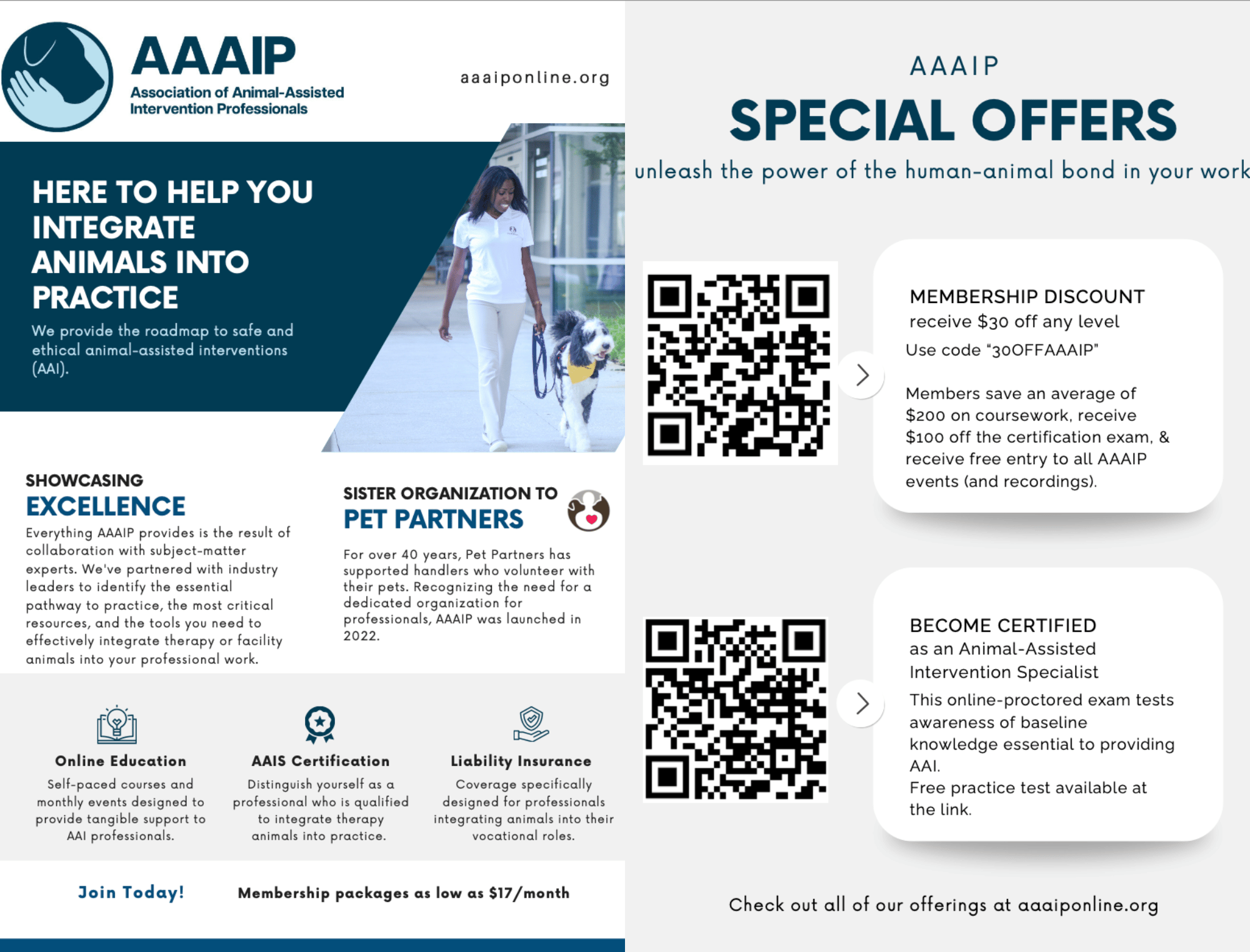
Now that your expertise is verified, it’s time to focus on your incredibly important partner: your animal. The next crucial step is applying for the Evaluation for Professionals.
This isn’t just a test of capability; it’s a deep dive into well-being. This evaluation is designed to ensure that your animal is not only capable of the demanding work you do but is truly thriving within your specific work environment. It’s about ensuring a safe, positive, and sustainable partnership for both of you as you make a difference in the lives of others.
Screening Clients
Effective screening and assessment of clients prior to utilizing animal-assisted therapy and animal-assisted activities is crucial.
This includes, but are not limited to:
- Individuals with underlying asthma, respiratory allergies, immunosuppressive disorders or allergies to animal food, dander, fur or saliva face significant risks when engaging in AAT (Centers for Disease Control and Prevention, 2024).
- Clients with specific fears or phobias to certain animals or the general concept of animal interaction may experience heightened anxiety during AAT or AAA and must be considered (Centers for Disease Control and Prevention, 2024).
- Identifying potential risks such as allergies, phobias, and emotional discomfort, is essential.
Evidence Supporting AAI and Benefits of AAT for Individuals with Various Neurodevelopmental, Mental Health, and Physical Disabilities
Incorporating therapy dogs into AAT has shown remarkable benefits. Patients participating in AAI programs with therapy dogs experienced improvements in their range of motion, fine motor skills, and overall motivation.
One innovative approach involved dressing therapy dogs in modified jackets with zippers and buttons, allowing patients to practice important daily living skills. This hands-on activity emphasized that 68.1% of participants perceived there to be benefits for fine motor skills (Fralinger et al., 2023). These findings suggest that personalized, pet-focused activities can create a more engaging and supportive environment for individuals living with neurocognitive disorders.
AAI can provide cognitive benefits on patients with mental health conditions as well as individuals who have had a stroke (Fekete et al., 2023). Patients with neurocognitive disorders, who experience impairments in memory, comprehension, and learning, may improve short term memory through activities such as recalling an animal’s name or remembering the animal’s favorite food (Alarcón-Braga et al., 2023). These interventions create a more engaging and supportive environment while improving process skills. AAI has also been shown to support children with physical and mental disabilities through activities such as baking a cake for therapy animals to help practice organizing timing, sequencing steps, and sustaining performance (Elmaci and Cevizci).
The unconditional acceptance offered by animals boosts self esteem, reduces anxiety and loneliness, and promotes social interaction skills (Klimova et al., 2019). Research shows that the presence of a therapy dog encourages verbal interactions, eye contact, and positive emotional responses, with clients often appearing more relaxed, engaged, and socially connected (Wesenberg et al., 2018). In neurological rehabilitation, therapy animals can also help facilitate social interaction between the client and the therapist and improve client participation (Sherrill & Hengst, 2022; Vignolo et al., 2024).
Virtual reality (VR) has emerged as a safe, realistic, and cost-effective interactive environment that enhances client engagement. Interventions utilizing VR include sessions with robotic pets or virtual reality treatments, allowing individuals to interact with virtual animals using hand gestures, creating an immersive experience akin to being part of a real therapy group (Abdessalem et al., 2022). These activities promote upper extremity reach, postural control, and hand-eye coordination, fostering positive physical engagement while clients participate from the comfort of their own homes (Abdessalem et al., 2022).
What are the Top 3 Animals Incorporated as Therapy Animals in Animal-Assisted Interventions?
- Dogs
Dogs are often incorporated due to their friendly nature and ability to bond with humans. They are utilized in therapy for various conditions, including mental health support and physical rehabilitation (Kruzer, 2022).
- Horses
Incorporated in equine-assisted therapy, horses can help individuals develop emotional awareness, build confidence, and improve social skills. Their large size and unique communication style can provide valuable therapeutic benefits (Kruzer, 2022).
- Cats
Cats are increasingly recognized for their calming presence and ability to reduce stress and anxiety. They are often included in therapeutic settings, particularly in environments like nursing homes or schools. Additionally, those who have a fear of dogs, cats are great alternatives for therapy (Kruzer, 2022).
An Occupation-Focused Manual for Dementia Care
An Occupation-Focused Manual
This evidenced-based AAI manual intends to provide practical guidance for therapists, advocate for further research and training in this area, and highlight potential barriers that are inhibiting OTPs from utilizing AAI in their treatment planning. This compilation of evidence-based activities can offer therapists a structured framework for incorporating AAI into their practice, ensuring that interventions are effective and focus on a patient’s needs.

2 Examples of What Happens in an AAI Session?
1. Animal-Assisted Therapy
Individual or Group Activity: Shuffling Hats
Materials Needed:
- Therapy animal (i.e., dog, cat, bunny, etc.)
- Dog treats
- Multicolor party hats
Instructions:
- Have the client interact with the animal; begin by petting them so they become comfortable with engagement
- Have the client align the party hats on a flat surface, in a row, following one of the color sequences from the worksheet attached
- Instruct the client to place a treat under a particular color hat(s)
- Therapist shuffles the party hats out of order
- The therapist instructs the client to remove the hat(s) that contain the treat(s) for the animal. If the pet is trained to find treats, the pet can search for the treat(s).
Modifications:
Upgrades:
- Have the client use a reacher to grasp the party hats and treats from a high surface and place them on the ground
- Increase the number of party hats to increase scanning in a busier environment
- Have the client place the hats on a lower surface to address postural control
Downgrades:
- Position the party hats in front of client at comfortable distance
- Limit the number of cones
- Incorporate rest breaks by allowing client to pet animal between each set

Safety Precautions: To ensure the patient’s safety, please supervise them while working with animals. If your patient has food allergies or dander, fur, or saliva allergies, this intervention strategy is unsuitable for them. Additionally, if they have a fear of specific animals or heightened anxiety during live interaction with animals, this activity is not recommended. Be cautious of potential paper cuts. Ensure that the animal does not display resource guarding. It is recommended that animals pass a behavioral evaluation prior to performing activity.
Purpose: The goal of the activity is to engage participants in a fun and stimulating experience, encouraging them to learn and develop skills important for everyday life. The activity not only focuses on motor skills such as reaching, but it encourages clients to problem-solve, important for activities such as dressing or grooming.
Performance Skill: This activity addresses several process skills, including attending (maintaining attention to the task), choosing (the appropriate party hat), handling (supporting and stabilizing the party hats to ensure that they do not rip), sequencing (aligning the hats in a particular order), searching (finding the indicated hat), and organizing (arranging the hats in an orderly fashion) (AOTA, 2020b). The activity also addresses range of motion and reaching in different planes, including crossing midline.
Area of Occupations: Social participation, leisure, ADLs (AOTA, 2020b).
- Animal-Related Engagement
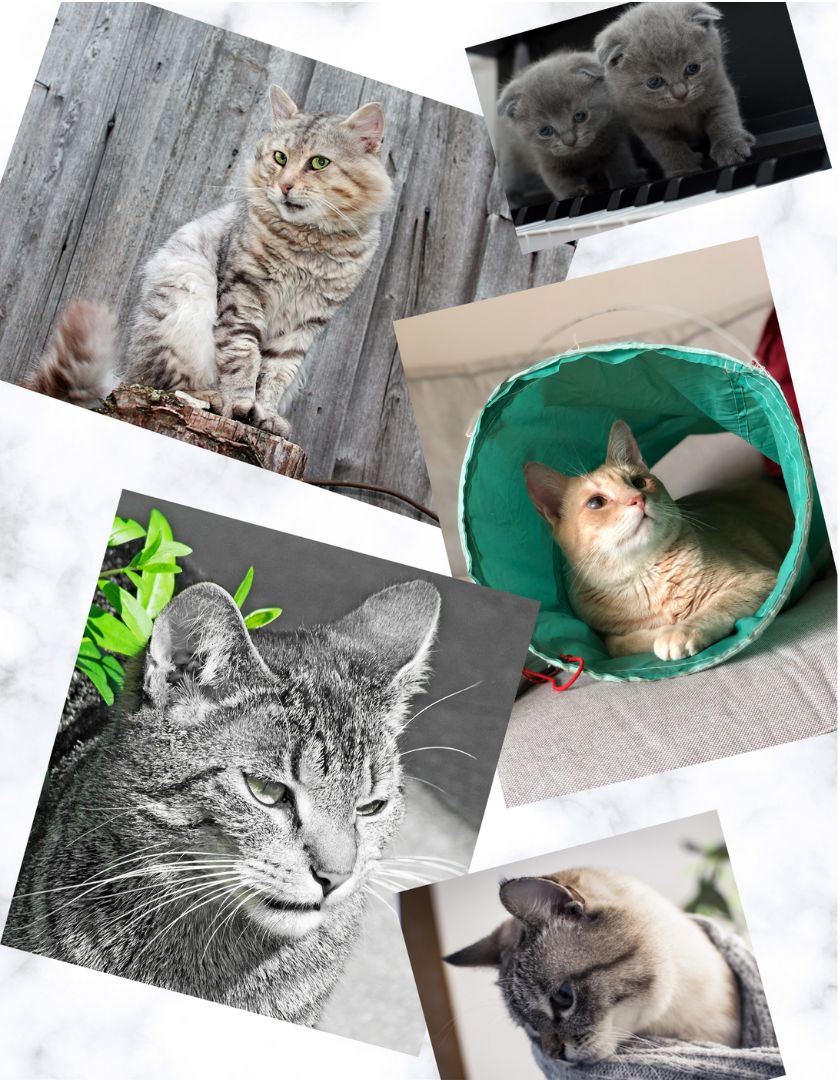
Group Activity: Pet-themed Collage Making Materials Needed:
- Animal magazines
- Glue
- Scissors
- Stickers
- Markers, crayons, and/or colored pencils
- Poster Boards or cardstock
Instructions:
- While introducing the activity, provide each participant with a poster board or piece of cardstock and various animal magazines. Ask participants to cut out images of animals they like or words that would describe their dream pet.
- Participants can create a collage of their own “dream pet” by cutting and gluing pictures onto the provided canvas.
- While creating the collages, encourage participants to share stories about why they chose specific animals or words.
- Potential discussion questions:
- “Why did you choose that dog?”
- “What do you think this animal would like to do?”
- “What are some characteristics this animal might have?”
- Allow participants to share their collages with the group. The facilitator should observe all colleges and make connections between group members to encourage social interactions.
Modifications:
Upgrades:
- Allow participants to work together on one large collage, encouraging increased interaction to agree on the single animal
- Add details writing prompts regarding chosen animals
Downgrades:
- Provide pre-cut images or allow participants to tear out images rather than using scissors
- Allow caregivers or additional staff to assist in more complex tasks such as gluing or writing
Safety Precautions: Use safety scissors if needed to ensure decreased chance of harm. Ensure all provided materials are non-toxic (e.g. glue, markers, etc…). Monitor participants to ensure they are safe while using sharp tools such as scissors. Remain observant and mindful of potential overstimulation or maladaptive behaviors from participants.
Purpose: The purpose of the activity is so clients can collaborate, share ideas, and discuss creations, fostering a sense of community. Additionally, participants can work on motor skills that are engaging and meaningful to them.
Performance Skill: This activity enhances producing speech by encouraging participants to share their thoughts while making their collages. It also addresses taking turns, gesticulating (through crafting), expressing emotions, and encouraging others as participants share and complement each other’s work.
Area of Occupations: Social participation, leisure (AOTA, 2020b)
References
Abdessalem, H. B., Cuesta, M., Belleville, S., & Frasson, C. (2022). Virtual reality zoo therapy: An interactive relaxing system for Alzheimer’s disease. Journal of Experimental Neurology, 3(1), 15-19. https://doi.org/10.33696/Neurol.3.057.
Alarcón-Braga, E. A., Salazar-Valdivia, F. E., Valdez-Cornejo, V. A., Mosquera-Rojas, M. D., Rondon-Saldaña, J. C., & Segura, E. R. (2023). Animal-assisted therapy in dementia: An updated literature review. Aging Medicine and Healthcare. 14(1), 43- 47. http://doi.org/10.33879/amh.141.2022.04037
Association of Animal-Assisted Intervention Professionals (AAAIP). (2024). Competencies for the ethical inclusion of therapy and facility animals. https://www.aaaiponline.org/assets/docs/AAAIPCompetencies.pdf .
Association of Animal-Assisted Intervention Professionals (AAAIP). (n.d.). AAI glossary. Association of Animal-Assisted Intervention Professionals. https://aaaiponline.org/glossary/
Centers for Disease Control and Prevention. (2024). H. animals in health-care facilities. U.S. Department of Health and Human Services. https://www.cdc.gov/infection- control/hcp/environmental-control/animals-in-healthcare-facilities.html
Elmaci, D.T. & Cevizci, S. (2015). Dog-assisted therapies and activities in rehabilitation of children with cerebral palsy and physical and mental disabilities. International Journal of Environmental Research and Public Health, 12(5), 5046-5060. https://doi.org/10.3390/ijerph120505046
Fekete, T., Bognár, K., & Káplár, Z. (2023). The effect of animal-assisted interventions on the course of neurological diseases: A systematic review. Systematic Reviews, 12(1), 251. https://doi.org/10.1186/s13643-023-02387-y
Fralinger, C., Bolt, P. C., Bennett, C., & Craig, S. (2023). Pilot Study of Animal Assisted Therapy Provided in a Student Run Pro Bono Clinic. Journal of Student-Run Clinics, 9(1). https://doi.org/10.59586/jsrc.v9i1.386
Klimova, B., Toman, J., & Kuca, K. (2019). Effectiveness of dog therapy for patients with dementia – a systematic review. BMC Psychiatry, 19(1), 276. https://doi.org/10.1186/s12888-019-2245-x
Kruzer, A. (2022, July 18). 4 popular therapy animals. The Spruce Pets. https://www.thesprucepets.com/therapy-animals-4174886
Sherrill, M., & Hengst, J. A. (2022). Exploring animal-assisted therapy for creating rich communicative environments and targeting communication goals in subacute rehabilitation. American Journal of Speech-Language Pathology, 31(1), 113-132. https://doi.org/10.1044/2021_AJSLP-20-00284
Vignolo, M., Zuccarino, R., Truffelli, R., Gemelli, C., Giove, E., Ferraro, P. M., Manunza, D., Trinchero, C., Cipollina, I., Lungu, M., Lizio, A., Gragnano, G., Cabona, C., Pardini, M., Caponnetto, C., & Rao, F. (2024). Dog-assisted physiotherapy in amyotrophic lateral sclerosis: A randomized controlled pilot study. European Journal of Physical and Rehabilitation Medicine, 60(3), 470–476. https://doi.org/10.23736/S1973-9087.24.08343-6
Wesenberg, S., Mueller, C., Nestmann, F., & Holthoff-Detto, V. (2018). Effects of an animal‐assisted intervention on social behaviour, emotions, and behavioural and psychological symptoms in nursing home residents with dementia. Psychogeriatrics,19(3),219–227. https://doi.org/10.1111/psyg.12385
About Our Guest Bloggers:
Amanda Arsenault OTS, Jaydin Breedlove OTS, Peterjon Garcia OTS, Madison Holland OTS, and Michelle Pham OTS, are master of occupational therapy students from Stanbridge University, completing their thesis project on Animal-Assisted Interventions under their thesis advisor, Dr. Macy Burr, OTD, OTR/L, ATP, C-AAIS, CAS. Special thanks to our former guest bloggers and original authors of Companions in Care: An Occupation Focused Manual, Vanessa Brito, OTS; Kaila Phaychanpheng, OTS; Brooke Shackelford, OTS; and Gabriela Villaseñor, OTS, for their earlier contributions to this project.



1 thought on “Animal Therapy: An In-Depth Look at Animal-Assisted Interventions”
What a wonderfully thorough guide to making AAI the best partnership ever! Its heartwarming to see such dedication to ensuring both the professional and the animal are perfectly matched, certified, and thriving. While the emphasis on safety assessments and client screening is, of course, vital, it does make one wonder if were sometimes being *just* a tad overzealous – maybe a therapy session shouldnt require a full pandemic-level preparedness check! Nonetheless, the sheer detail, from the exam questions to the activity examples, is impressive. It’s clear the AAAIP knows their stuff, though perhaps they could add a section on dealing with the inevitable moment the therapy dog decides the examiners shoes are more interesting than the evaluation. Overall, a fantastic resource for anyone looking to bring the magic of AAI into their practice!